The Digital Surgery Laboratory at the Champalimaud Foundation is an innovative unit that combines technology and medicine to help improve surgical practice. With a multidisciplinary team of healthcare professionals, researchers, and engineers, the laboratory develops solutions based on artificial intelligence and augmented reality. The goal is to enhance surgical precision, personalize treatments, and improve technological literacy in healthcare. Collaboration among specialists allows for the creation of new approaches in digital surgery. This cutting-edge environment drives innovation and the clinical application of emerging technologies.Our main research areas include:
• Developing AI algorithms to aid screening, diagnosis, treatment, and follow-up
Our research focuses on leveraging machine learning and deep learning techniques applied to medical imaging and electronic health records. These AI-driven tools are designed to assist healthcare professionals in enhancing the accuracy and efficiency of screening and diagnosis, selecting the most appropriate treatments, predicting treatment response, and personalizing follow-up plans based on each patient’s characteristics and clinical journey.
• Enhancing the generalizability and robustness of AI algorithms to accelerate clinical adoption
Our technical studies investigate innovative strategies inspired by biological vision and causal methods to improve the generalizability and robustness of AI models. These methods are essential for ensuring the safe and reliable deployment of AI technologies across diverse healthcare settings and patient populations, supporting their widespread adoption in clinical practice.
• Advancing medical data visualization through immersive and interactive solutions
We are developing cutting-edge visualization techniques to enable real-time, intuitive access to both imaging and non-imaging health data throughout the patient journey. Our work involves creating immersive 3D digital twins of patients, which offer enhanced depth perception and improved spatial understanding of anatomical structures. We are also exploring the use of Generative AI to improve access to clinical information for healthcare professionals and patients. These tools aim to support surgical planning, clinical decision-making, and patient education by making complex data more accessible and actionable.
Our Clinical studies examine the potential of physical exercise as a concurrent therapy along with standard care to counteract the overall side effect burden of breast cancer treatment resulting from fatigue, cardiotoxicity, neuropathies, and sleep disturbances. Examples of our clinical research include a 4 to 6 month randomized controlled trial that is examining the impact of supervised exercise on Ki67 among breast cancer patients undergoing neoadjuvant treatment (The Neoadjuvant Exercise Oncology Program – NEO -Program). We have other clinical trials in preparation to 1) examine whether resistance exercise can improve tolerability to cyclin-dependent kinase 4/6 inhibitors (CDK4/6i) with endocrine therapy in estrogen receptor-positive (ER+)/Human Epidermal Receptor 2-negative (HER2-) breast cancers and 2) to determine whether physical exercise can improve sleep patterns during adjuvant hormone therapy in hormone-dependent (HR+) breast cancer.
Epidemiological studies use already existent data resources to expand our understanding of the role of physical activity and sleep in the etiology of cancer. Epidemiological studies are important to determine the distribution of risk factors for cancer such as physical inactivity or poor sleep in the population and quantify dose-response relationships between physical activity, sleep, and cancer risk and cancer survivorship. Examples of ongoing studies include our 1) examinations of the distribution of activity levels in the Portuguese population (n=8000 adults) using wearable measures of step counts and stepping intensity, and 2) examinations of associations between wearable-based sleep patterns and risk of mortality among adults (n=5000 adults).
Digital Health studies in our lab are examining the clinical value of wearable technology in oncology for the timely identification and monitorization of cancer treatment side effects including fatigue. These studies will allow for more individualized and proactive cancer treatments. We are particularly interested in identifying digital biomarkers of cancer outcomes using physical activity, exposure to light, and sleep measures, extracted from consumer and research-grade wearables. One example of a digital health study that we conducted recently includes the characterization of sleep patterns using a contactless sleep device among 25 women undergoing neoadjuvant chemotherapy and whose sleep patterns were monitored for 4 consecutive months throughout the entire duration of their treatment.
Augmented Reality in Breast Surgery Education. Gouveia PF, Luna R, Fontes F, Pinto D, Mavioso C, Anacleto J, Timóteo R, Santinha J, Marques T, Cardoso F, Cardoso MJ. Breast Care (Basel). 2023 Jun;18(3):182-186. doi: 10.1159/000529587. Publication Date: 2023
Selected Projects
METABREAST Sponsor: IAPMEI Agendas Mobilizadoras Principal Investigator: Pedro Gouveia
METABREAST is a multidisciplinary clinical research project led by the Champalimaud Foundation, exploring how augmented reality (AR), artificial intelligence (AI), and computer vision can enhance breast cancer surgery. The project integrates 3D imaging, MRI data, and real-time intraoperative visualization to create a digital twin of the patient’s anatomy, enabling surgeons to precisely locate tumors and preserve healthy tissue. METABREAST aims to reduce unnecessary mastectomies and reoperations by improving surgical accuracy through digital overlays viewed via AR headsets. The system is currently being developed and validated through clinical trials, and it includes the creation of immersive surgical environments. This project will provide critical insights into the feasibility and clinical impact of intelligent AR systems in cancer surgery.
Impact of Physical Exercise on Wearable-based Measures of Sleep and Exposure to Light at Night among Adults Undergoing Active Treatment for Breast Cancer Sponsor: Liga Portuguesa Contra o Cancro Principal Investigator: Pedro Saint-Maurice
This is a 12-week randomized controlled trial of supervised exercise and sleep in adjuvant hormone therapy in hormone-dependent (HR+) breast cancer. This project will determine whether combined exercise (aerobic and resistance training) can improve sleep duration, quality, and sleep timing in breast cancer patients. The project will also examine whether exercise can impact wearable-based metrics related to exposure to artificial light. The potential of exercise to improve sleep has major implications for cancer patients on hormone therapy that often experience disrupted sleep and exacerbated treatment-related adverse effects.
RELIEVE is in the design stage and will be a prospective cohort of cancer patients being followed at the Champalimaud Foundation and that have been referred to a structured and supervised exercise program at our clinic. Patients enrolled in RELIEVE will complete behavioral and clinical assessments at baseline and follow an exercise program using Technogym latest technology, where the prescription and execution of exercises is assisted by artificial intelligence. RELIEVE will allow that we improve our scientific understanding of the impact of exercise on cancer treatment outcomes.
Disclaimer: contact us for more information about these studies or if you wish to know more about other ongoing work we have at our lab.
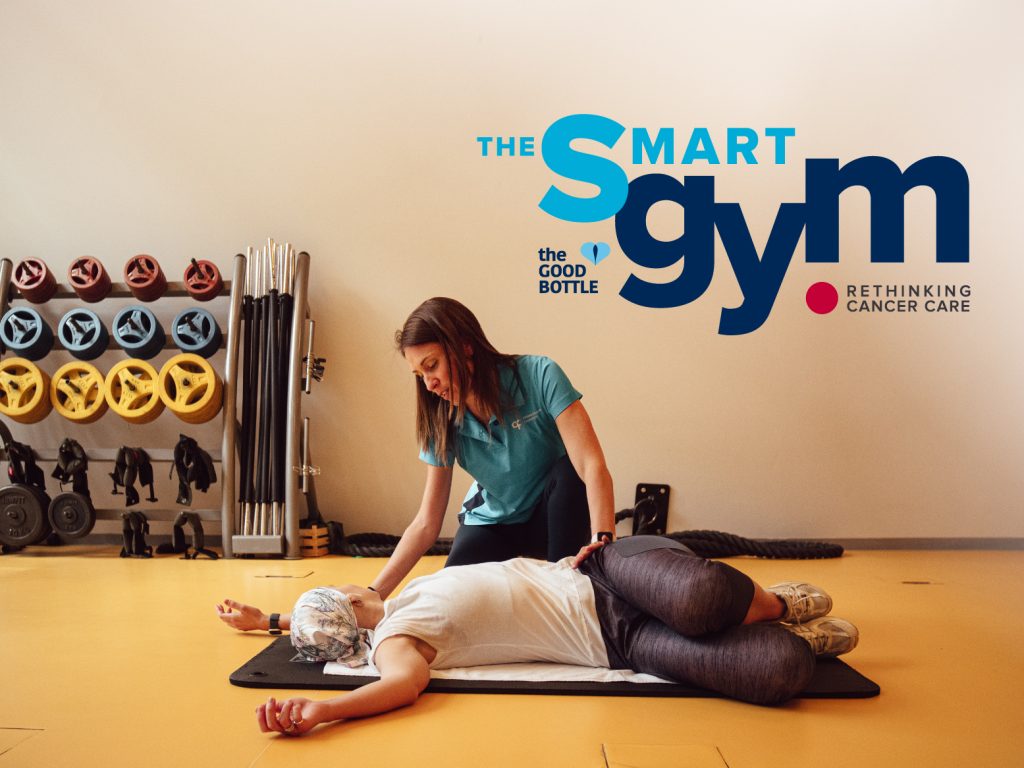
The SmartGym
Where our Science Takes Place
Our priority at the Champalimaud Foundation is to develop a structured and personalized offer of exercise programs for all patients diagnosed with cancer. To achieve this goal, we designed RELIEVE – an innovative program that will create a personalized referral and exercise prescription fully integrated into the clinical care pathway for patients followed at the Champalimaud Clinical Centre. RELIEVE will be implemented at our new exercise facility The SmartGym, thanks to a generous donation from The Good Bottle.
The SmartGym will be equipped with Technogym latest technology including the Technogym A.I. powered checkup assessment hardware and software that includes a cloud ecosystem to securely store and manage all data collected during the exercise sessions. As part of RELIEVE, we will also implement an individualized and passive monitoring system for behaviors of daily life including physical activity and sleep, outside the clinical setting. RELIEVE will inform our patients and our science about which exercise programs can help cancer patients the most.
Moving Beyond
Science on Exercise Oncology
There is established evidence that physical exercise is a key player for cancer prevention and for improving the prognosis and quality of life of people who have cancer. Our lab organized the conference Moving Beyond, which took place at the Champalimaud Foundation on April 3 and 4 2025 and gathered world scientific leaders in the field of “exercise oncology”.
During the two-day conference, we interviewed a series of invited speakers on the benefits of physical activity for cancer prevention and treatment and asked speakers to share some of the key scientific advances in exercise oncology.